Natural Dyes in Berber Rugs: Plants, Wool and Craft
· 3 min read
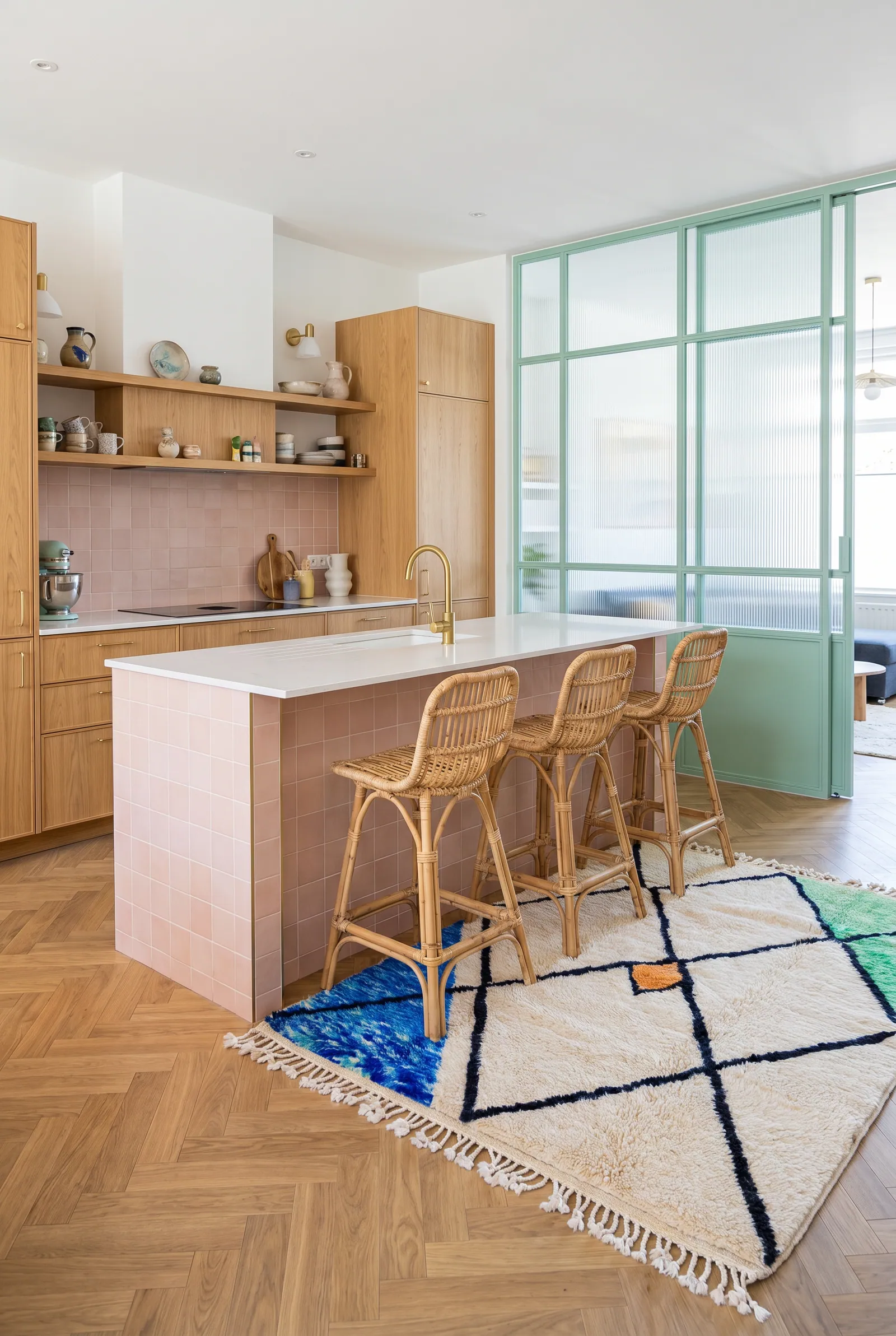
In short: Berber rugs owe their rich, warm tones to plant-based and mineral dyes — henna, pomegranate rind, indigo, saffron — applied to 100% natural raw wool. This artisanal process produces unique shades that vary slightly from one rug to the next, and that variation is precisely what gives each piece its value. Every rug in the TAKNAJ collection is coloured exclusively with natural dyes.
A palette drawn from the natural world
Long before a weaver ties her first knot, the wool has already undergone a remarkable transformation. In the Middle Atlas, the women who prepare the dye baths draw on a carefully preserved repertoire of plants, selected according to the season and altitude. Henna yields warm russet tones, pomegranate rind produces golden yellows, oak galls give deep browns, and indigo — traded along caravan routes for centuries — creates intense blues that hold their depth over time.
These raw materials do not dye alone: they require mordants, natural fixatives such as alum or iron sulfate, which bond the colour to the wool fibre and determine the final shade. The same indigo bath will produce midnight blue with iron sulfate, and sky blue with alum. This gentle, entirely natural chemistry explains why no two rugs from the same workshop are ever quite the same.
The wool: the first secret of a successful dye
The quality of the dye depends first on the quality of the wool. The rugs in the TAKNAJ collection are woven from 100% natural, hand-spun wool by women weavers in the Middle Atlas. This raw, chemically untreated wool has microscopic scales that absorb natural pigments evenly and durably.
Pre-washing the wool in slightly acidic water opens these scales and prepares the fibre to receive colour. The wool is then immersed in the dye bath, held at a constant temperature for several hours. The weaver watches, stirs, adjusts. Nothing is left to chance; everything is passed down orally across generations.
Natural colours and geometric patterns: a conversation
In the Mrirt style, natural dyes and geometry speak to each other. Diamond shapes, chevrons and broken lines are brought out by restrained colour contrasts: ivory, brown, terracotta, midnight blue. This chromatic restraint is not a lack of ambition — it is a deliberate aesthetic rooted in a culture where every colour carries symbolic meaning.
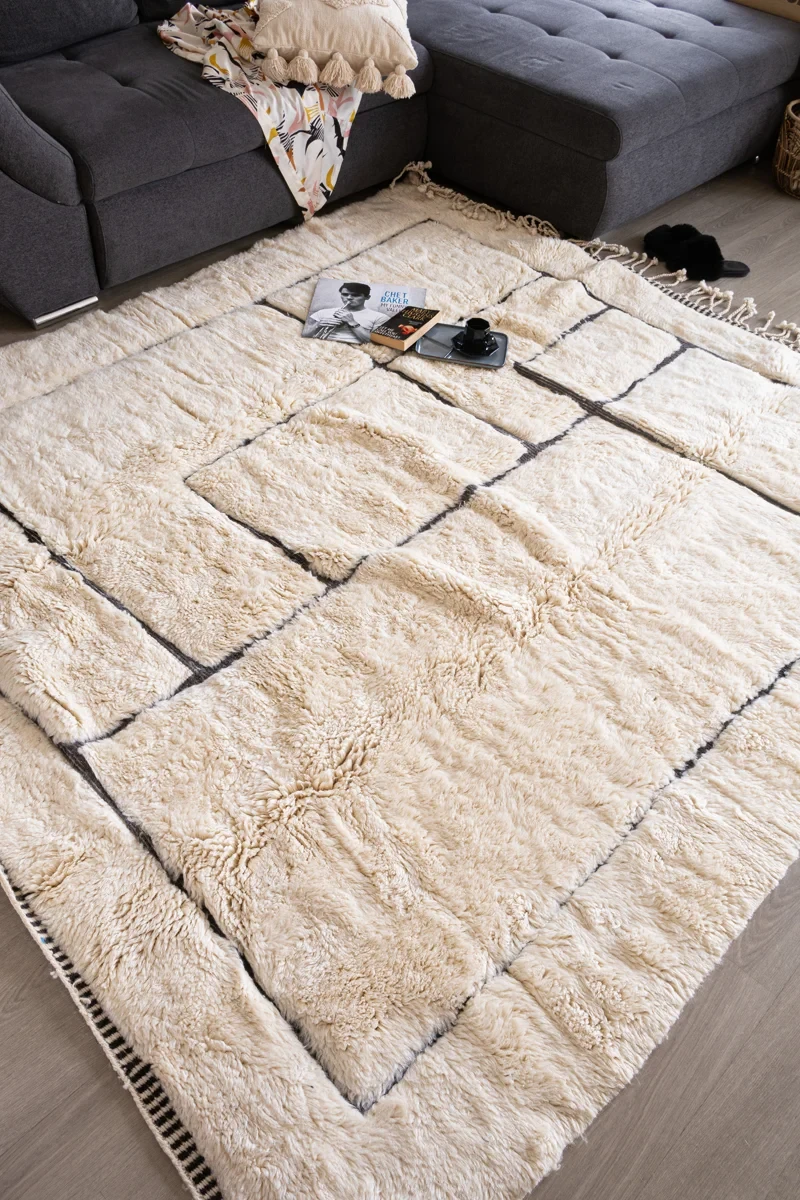
The Mrirt Geometric Rug – Labyrinthe perfectly illustrates this dialogue: its natural tones — achieved without a single synthetic dye — throw an intricate web of patterns into relief, evoking the paths of the Middle Atlas. Each piece is unique, hand-woven, and its price of 950 € reflects the complexity of the work involved.
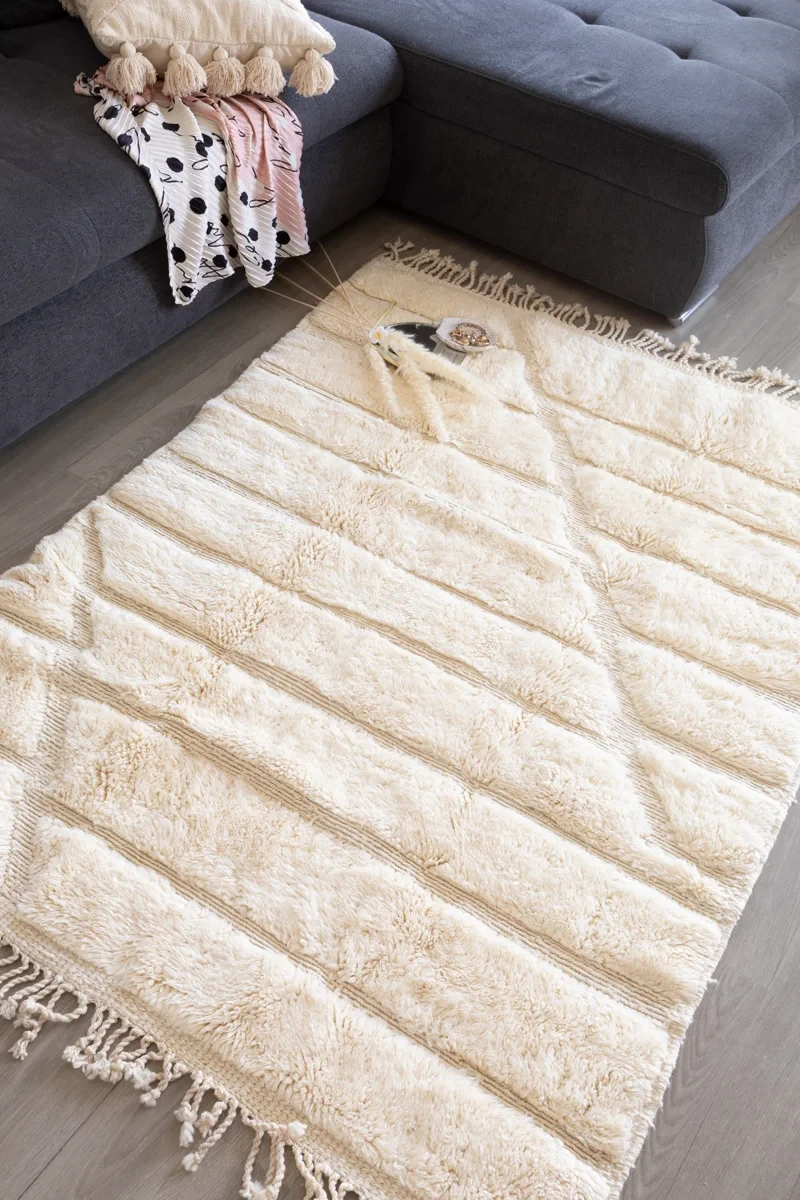
For those who prefer the purity of undyed wool, the Mrirt Cream White Rug – Polaire at 400 € reveals the raw beauty of natural wool in ivory and cream tones, with no dye intervention whatsoever. The wool speaks entirely for itself.
Why natural dyes age more gracefully
Unlike synthetic dyes, which can shift or fade unevenly over time, plant-based and mineral dyes patinate. They soften gently under light without losing their harmony. A naturally dyed Berber rug gains character with the years: nuances blend, contrasts settle, and the piece integrates even more naturally into its surroundings.
This is one of the reasons collectors and interior designers favour naturally dyed rugs for long-term projects. A chemical colour seeks to impress; a natural colour seeks to last.
Caring for a naturally dyed rug
Looking after a naturally dyed Berber rug is straightforward, provided you follow a few simple principles:
- Air the rug regularly in the shade — never in prolonged direct sunlight.
- Treat stains with cold water and a mild soap, dabbing rather than rubbing.
- Avoid harsh chemical cleaners that could damage the natural mordants.
- For a deep clean, entrust the rug to a specialist in washing natural textiles.
- Rotate the rug twice a year to ensure even wear.
These simple steps preserve the integrity of the colours and the structure of the wool for decades. All rugs are shipped across the EU — for full details on delivery times and rates, see our guide on Shipping Berber rugs to France and Europe.
- natural dyes
- berber rugs
- natural wool
- Mrirt
- Middle Atlas craft
Frequently asked questions
How can you tell if a Berber rug has been naturally dyed?
Natural dyes produce slightly irregular, deep colour nuances without perfect uniformity. The tones are typically earthy, botanical or mineral — ivory, ochre, brown, indigo — and they patinate harmoniously over time rather than fading unevenly or flaking off.
Are natural dyes on Berber rugs colourfast?
Yes, plant-based and mineral dyes fixed with natural mordants are long-lasting. They soften gently in light without losing their harmony, unlike synthetic dyes which can shift abruptly over time.
Which plants are used to dye the wool in Berber rugs?
Weavers in the Middle Atlas use henna for warm reds, pomegranate rind for golden yellows, oak galls for deep browns, and indigo for blues. Mordants such as alum or iron sulfate fix and nuance these colours in the wool fibre.