Moths in Wool Rugs: Prevention and Natural Protection
· 3 min read

In short: It is not the adult moth but its larvae that eat wool fibres, feeding on the keratin they contain. Good ventilation, regular vacuuming and natural repellents such as cedarwood or lavender are usually enough to protect a handwoven wool rug without resorting to harsh chemicals.
Why are wool rugs so attractive to moths?
The common clothes moth (Tineola bisselliella) seeks out keratin, the protein found in animal fibres. Handwoven Berber rugs made from 100% natural wool – like every piece in the TAKNAJ collection, crafted by women weavers in Morocco's Middle Atlas – offer exactly the dense, untreated fibre that female moths look for when laying their eggs.
Understanding this is key to prevention: the adult moth does no damage at all. It is the larvae that hatch and tunnel through the pile over several weeks, often going unnoticed until the damage is already visible.
Spotting an infestation: warning signs to look for
Early detection makes all the difference. Check your rug regularly for these signs:
- Thinning or bare patches in the pile, especially under furniture or in dimly lit corners.
- Small silky tubes or white cocoons attached to the fibres.
- Pale beige moths (about 1 cm long) flying close to the floor in the evening.
- Granular residue (larval droppings) on the back of the rug.
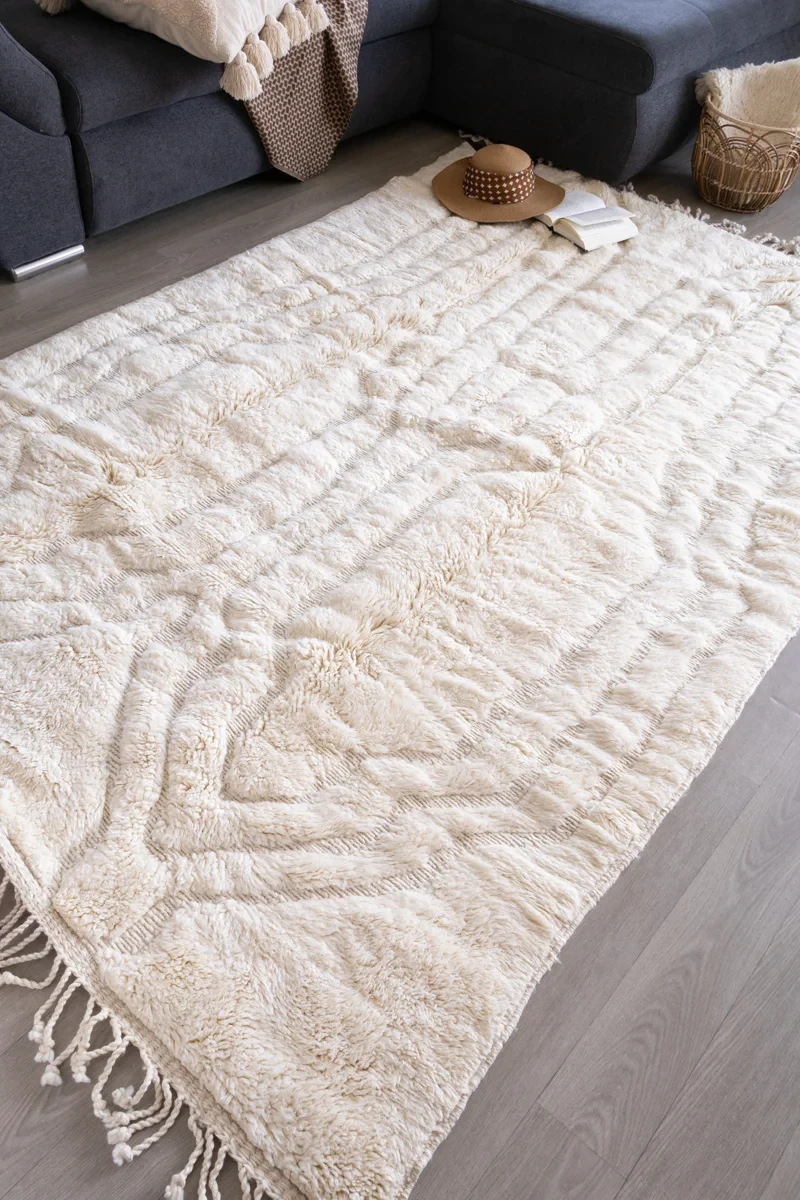
If you notice any of these on your Large Mrirt Sand Beige Rug – Taj Mahal, act immediately to limit the damage.
Prevention: everyday habits that make a real difference
Moths dislike light, movement and strong scents. A few simple routines are your best defence.
Air and expose to natural light
Take your rug outside two or three times a year, give it a gentle beating and let it air in natural daylight. Sunlight and vibration are highly effective at deterring larvae. Avoid leaving it in direct sun for extended periods, however, as this can fade the natural dyes.
Vacuum both sides regularly
Vacuum the front and back of the rug, paying close attention to the edges and any areas hidden under furniture. Moths thrive in undisturbed, dark spots. A rug in a busy family room is naturally at lower risk – if you are considering a wool rug for a child's bedroom, our guide Wool Rug for Kids Room covers placement and care in more detail.
Natural repellents
Several natural substances are proven to deter moths and are completely safe for wool fibres:
- Cedarwood: blocks or essential oil placed near or under the rug; refresh every three months.
- Lavender: small sachets tucked beneath the rug or along its edges.
- Cloves: wrapped in a thin cloth and placed close to vulnerable areas.
Long-term storage: protecting a rug you are putting away
If you plan to store a rug for several months, follow these steps to keep it safe:
- Clean the rug thoroughly and let it dry completely in the open air.
- Roll it pile-side inward and tuck cedarwood or lavender sachets inside the roll.
- Wrap it in a breathable fabric such as cotton or linen – never plastic, which traps moisture.
- Store it in a dry, well-ventilated and reasonably bright space.
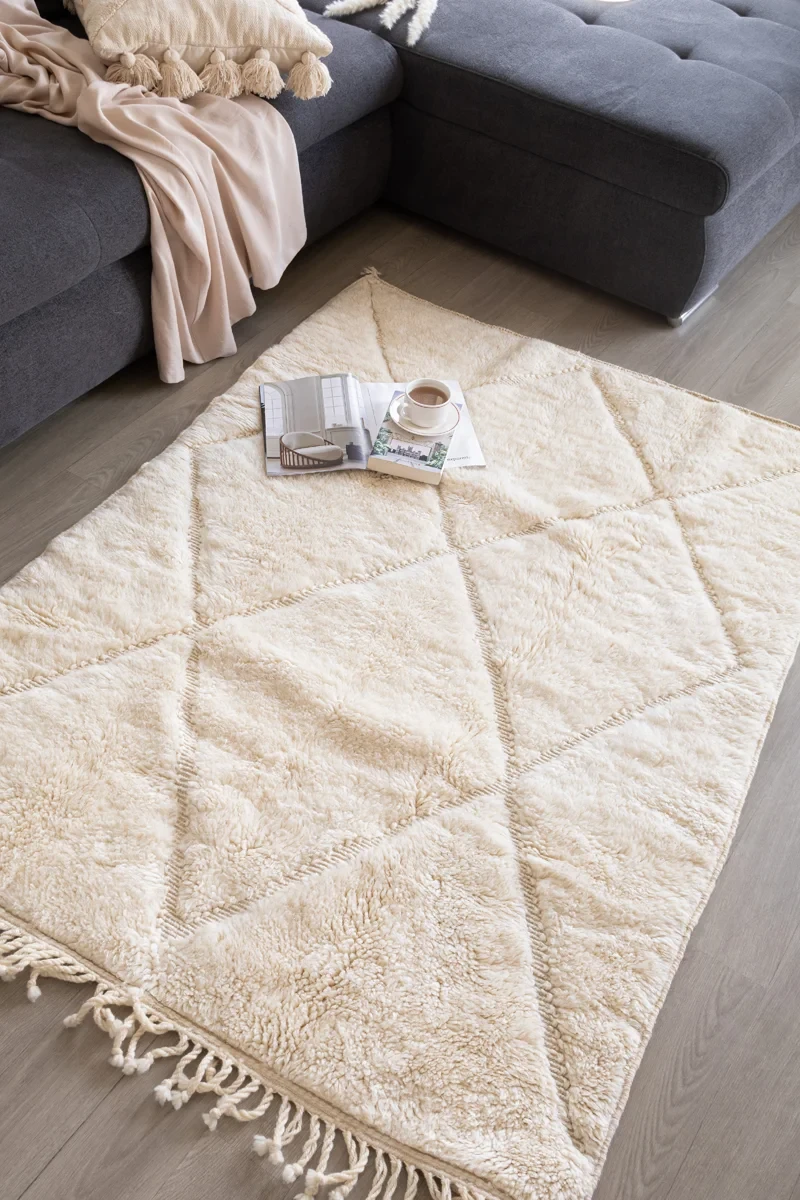
The Mrirt White Rug – Nuage, with its particularly thick wool, deserves extra care during storage to keep its texture and natural brightness intact.
Dealing with an active infestation
If you have already spotted damage, isolate the rug straight away to prevent the moths from spreading to other textiles. Place it in a sealed bag and put it in the freezer at -18 °C for at least 72 hours. This kills both larvae and eggs without harming the wool fibres. Once thawed, brush and vacuum the rug thoroughly outdoors before bringing it back inside.
For a deeper understanding of what makes a genuine Berber rug and how the wool is sourced, see our guide on authentic Berber rugs: origin, wool and how to recognise one.
If you have any concerns about a rug after delivery, our 14-day return policy allows you to send it back (return shipping is at the customer's expense). All TAKNAJ rugs are delivered free to mainland France in 2–4 business days; EU delivery takes 5–10 business days at a flat rate per rug.
- wool rug care
- moth prevention
- Berber rug
- natural protection
Frequently asked questions
How do I know if my wool rug has moths?
Look for thinning or bare patches in the pile, small white silky cocoons attached to the fibres, and granular residue on the back of the rug. These signs most often appear under furniture or in dark, undisturbed corners.
What natural remedies keep moths away from wool rugs?
Cedarwood blocks or essential oil, lavender sachets and cloves are all effective and safe for natural wool. Refresh them every two to three months to maintain their potency.
Can I treat a moth-infested wool rug at home without damaging it?
Yes. Seal the rug in an airtight bag and freeze it at -18 °C for at least 72 hours. The cold kills both larvae and eggs without harming the wool fibres. After thawing, brush and vacuum the rug thoroughly outside before returning it to its usual spot.
The rugs in this article
Read next
Wool Rug for Kids Room: the TAKNAJ Guide
A natural wool rug brings warmth, softness and character to any kids room. Find out how to choose the right Berber style for your child's space.
Authentic Berber rugs: origin, wool and how to recognise one
Origin, wool, knots, fringes: everything that sets a genuine hand-knotted Berber rug apart from a “Berber-style” copy, with 6 easy checks.