Authentic Berber rugs: origin, wool and how to recognise one
· 4 min read
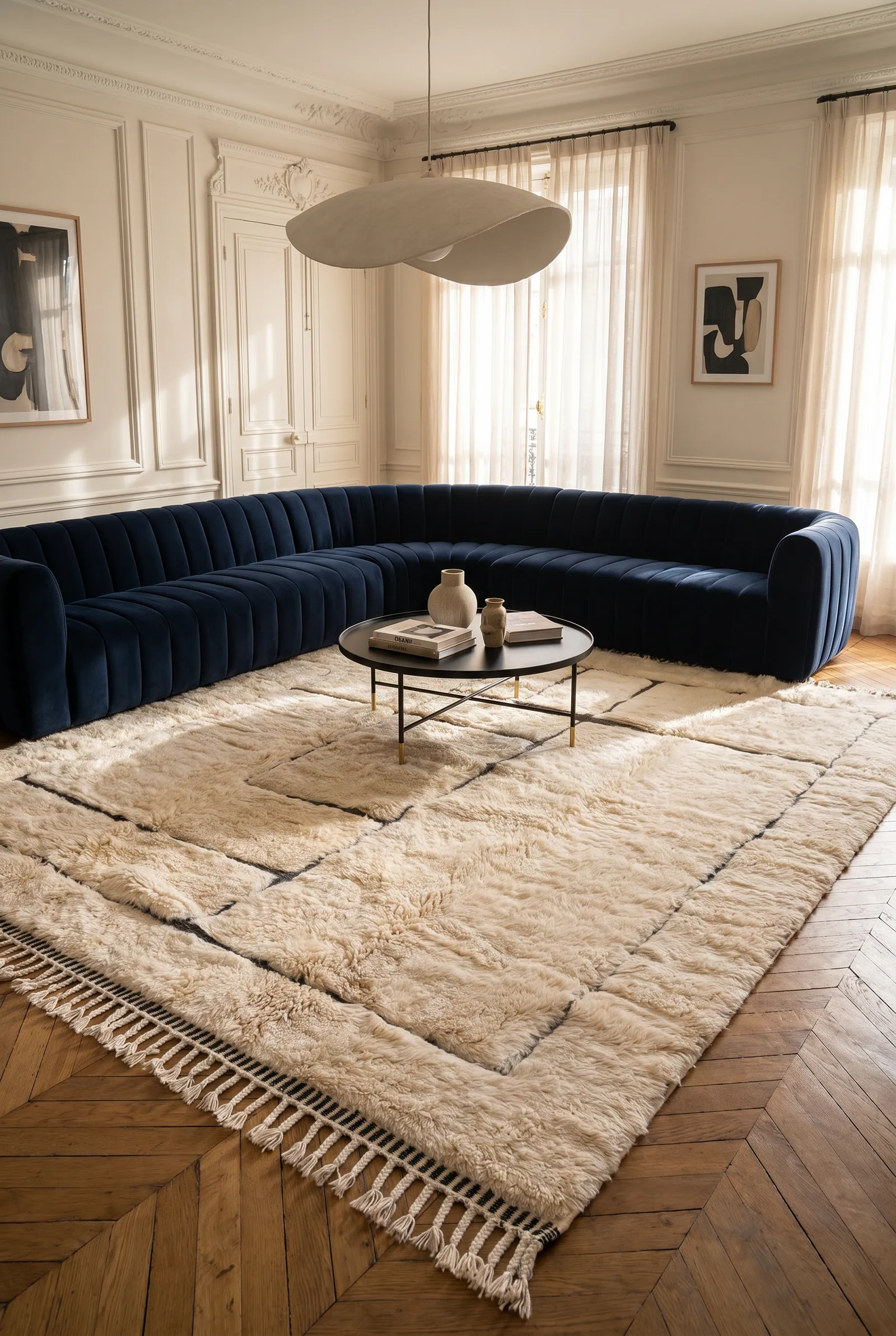
In short: an authentic Berber rug is hand-knotted or hand-woven by Amazigh women artisans in Morocco, usually in the Atlas mountains, from natural sheep’s wool. You can recognise it by its back, where knots and patterns are visible, by fringes that continue the warp threads, by small irregularities and by dense wool that feels slightly greasy. A very cheap “Berber-style” rug is almost always machine-made, often from synthetic fibres.
What is a Berber rug?
“Berber” refers to the Amazigh, the indigenous peoples of North Africa. In Morocco, Amazigh women have woven rugs for centuries, first for everyday life: insulation from cold mountain floors, sleeping, sitting, marking life’s great moments. Every rug is a one-off, often made by a single weaver or a few women of the same family.
Styles vary by region. The Middle Atlas is home to ivory-ground Beni Ourain rugs and thick-piled Mrirt rugs; the High Atlas to colourful Azilal rugs. We compare these styles in detail in our guide Mrirt, Beni Ourain or Azilal: the differences.
Berber rug, Moroccan rug, “Berber style”: the terms to know
- Berber rug: a rug made by hand by Amazigh women artisans using traditional techniques.
- Moroccan rug: a broader term. It covers Berber rugs but also urban rugs from Rabat or modern pieces made in Morocco.
- “Berber style”: a graphic inspiration only. These rugs borrow Berber diamonds and colours but are usually machine-made elsewhere, in polypropylene or blends.
- Hand-knotted: on a pile rug, each tuft of wool is knotted by hand around the warp threads. This work gives the rug its density and long life.
Wool: the heart of a Berber rug
An authentic Berber rug is made of sheep’s wool. It naturally contains lanolin, a wool grease that makes it slightly water-repellent and gives it that faintly greasy feel. It wears well, springs back after being pressed down and insulates against the cold.
Many rugs keep the natural colour of the fleece: ivory, cream, brown or black. Coloured rugs are dyed, in the past with plants such as madder, henna or indigo, today also with modern, more stable dyes. Thick, dense wool like that of Mrirt rugs makes a soft rug that dampens footsteps and noise.
A new natural-wool rug may shed a little during the first weeks and smell slightly of wool – that is normal and fades. Our care advice is gathered in the guide how to clean and care for a Berber rug.
How to recognise a genuine Berber rug: 6 checks
- Turn the rug over. On the back of a hand-knotted rug you can see the rows of knots, and the patterns show through with small irregularities. A perfectly even back covered with a glued fabric or latex layer points to industrial production.
- Look at the fringes. On a handmade rug, the fringes are the ends of the warp threads that run through the whole rug. Fringes sewn or glued onto the edge are a sign of machine production.
- Look for irregularities. Edges that are not perfectly straight, patterns that vary slightly, a few centimetres’ difference from one side to the other: these are the traces of a human hand.
- Feel the material. Natural wool is dense, supple, slightly greasy and does not shine like plastic. Synthetic fibre is often shiny, slippery and builds up static.
- Lift it. At the same size, a hand-knotted wool rug is noticeably heavier than an industrial one.
- Compare the price. Knotting a rug by hand takes weeks, sometimes months. A large “Berber rug” sold for a few dozen euros cannot be handmade. Our guide how much does a Berber rug cost? explains what justifies the price of a real piece.
Why choose an authentic rug?
A hand-knotted Berber rug is made to last. Well cared for, it lasts for many years and is often handed down from one generation to the next. It is also a one-off: you will not find the same rug in anyone else’s home.
Buying an authentic rug also keeps alive a craft passed from mother to daughter. The patterns themselves tell a story, which we describe in our guide to Berber symbols and their meaning.
TAKNAJ rugs
At TAKNAJ, every rug is a one-off, hand-made in the Middle Atlas from 100% natural wool. We specialise in Mrirt rugs, known for their thick, silky wool, and also select Beni Ourain-style pieces.
The Nuage Mrirt rug shows what natural wool brings: a thickness and softness no industrial rug can imitate.
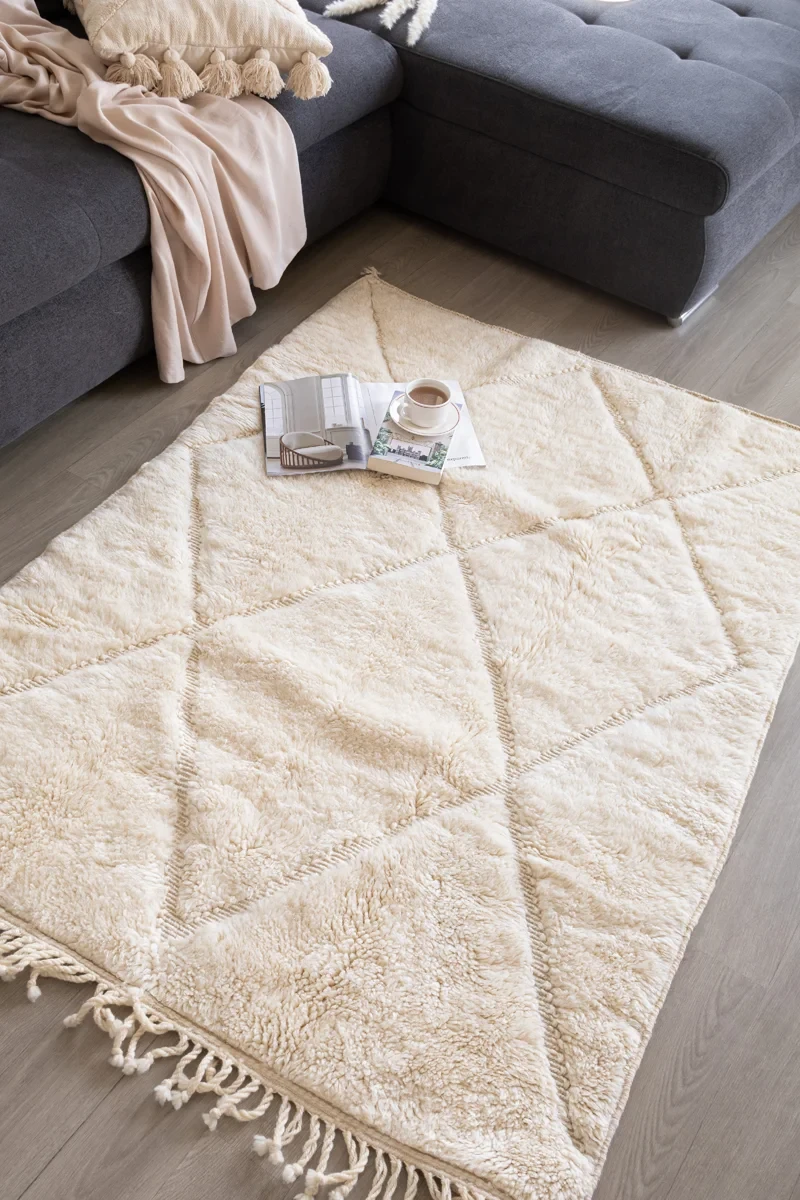
For a clean ivory ground, the Mont Blanc Beni Ourain rug lets the material speak, with no pattern at all.
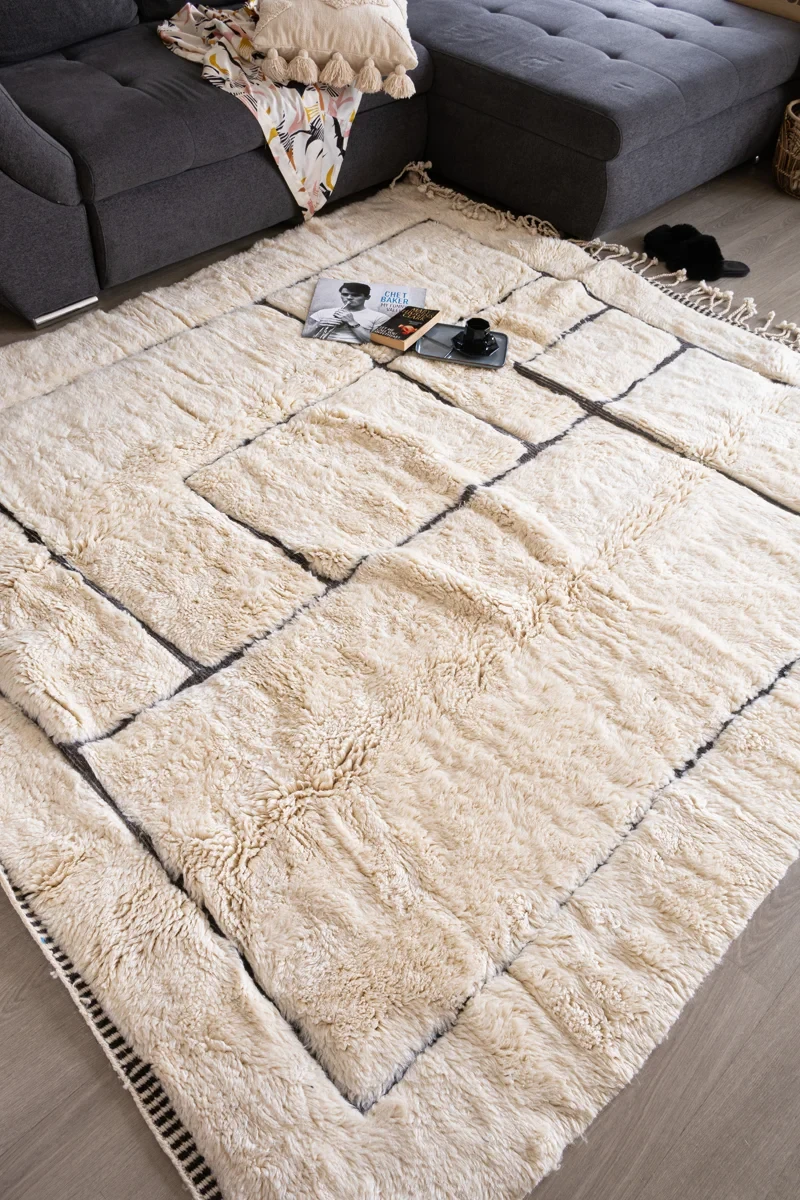
And as a large piece in thick wool with subtle geometric lines, the Labyrinthe Mrirt rug (270 x 222 cm) shows how even hand-knotting can be.
- authentic Berber rug
- hand-knotted
- natural wool
- Moroccan rug
- Middle Atlas
Frequently asked questions
How can I tell if a Berber rug is handmade?
Look at the back: on a hand-knotted rug the knots and patterns are visible and slightly irregular. The fringes should continue the warp threads rather than be sewn on. A perfectly even back or a latex-coated back points to a machine-made rug.
What is the difference between a Berber rug and a Moroccan rug?
A Berber rug is made by hand by Amazigh women artisans using traditional techniques. “Moroccan rug” is broader and also includes other rugs made in Morocco.
Does an authentic Berber rug shed?
Yes, a little, during the first weeks. These are short fibres left over from knotting. Shedding drops off clearly with regular vacuuming without a rotating brush.
Is a “Berber-style” rug a real Berber rug?
No. “Berber style” describes the look only. These rugs are usually machine-made from synthetic fibres and have neither the density nor the lifespan of a hand-knotted wool rug.