Kilim vs Pile Rug: Which One Should You Choose?
· 4 min read
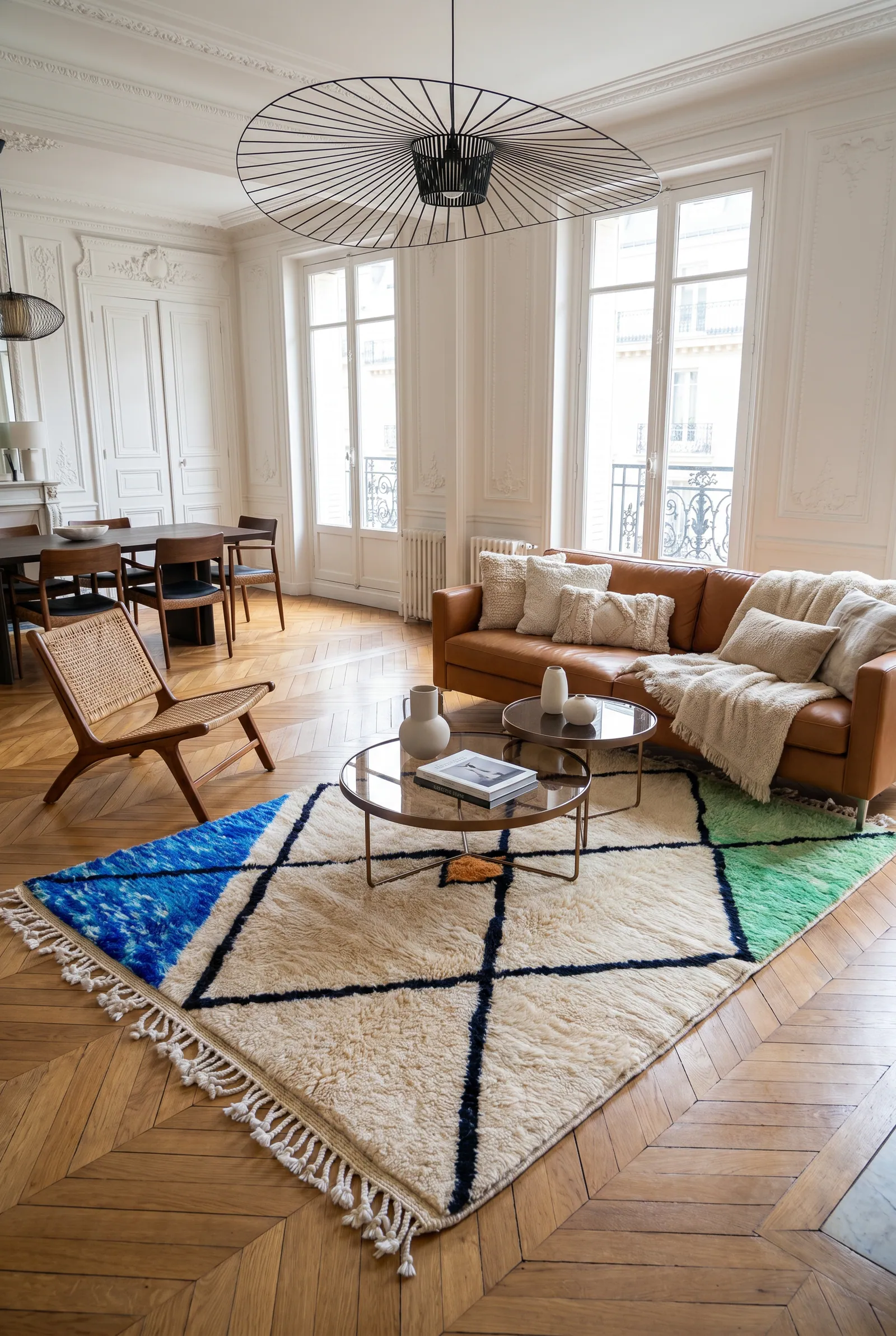
In short: A kilim is a flat-woven rug with no knots and no pile — lightweight, reversible, and graphically striking. A pile rug is built knot by knot, creating a thick, cushioned surface that feels warm and luxurious underfoot. Both are hand-woven in the Middle Atlas from 100% natural wool; the right choice depends on how you live and what you want your space to feel like.
Two Ancient Techniques, Two Completely Different Results
Kilim weaving is one of the oldest textile techniques in the world. Weft threads are interlaced tightly with warp threads to create a smooth, flat surface with no raised fibres. The rug is the same on both sides, making it fully reversible. Historically, this flat construction made kilims easy to fold and carry — essential for nomadic Berber tribes crossing the Atlas mountains.
A pile rug, by contrast, is built from individual knots. Each length of wool is tied around the warp threads and then cut to a uniform height, forming a dense, velvety surface. The higher the knot count per square decimetre, the more durable and refined the rug. This is the technique behind the most celebrated Berber styles: Beni Ouarain, Mrirt, and Azilal.
Feel, Thickness and Everyday Comfort
Walking on a kilim feels firm and close to the ground. That directness makes kilims ideal for dining rooms, hallways, and layered decorating schemes where you want texture without bulk. They also work beautifully in warmer climates or well-heated homes.
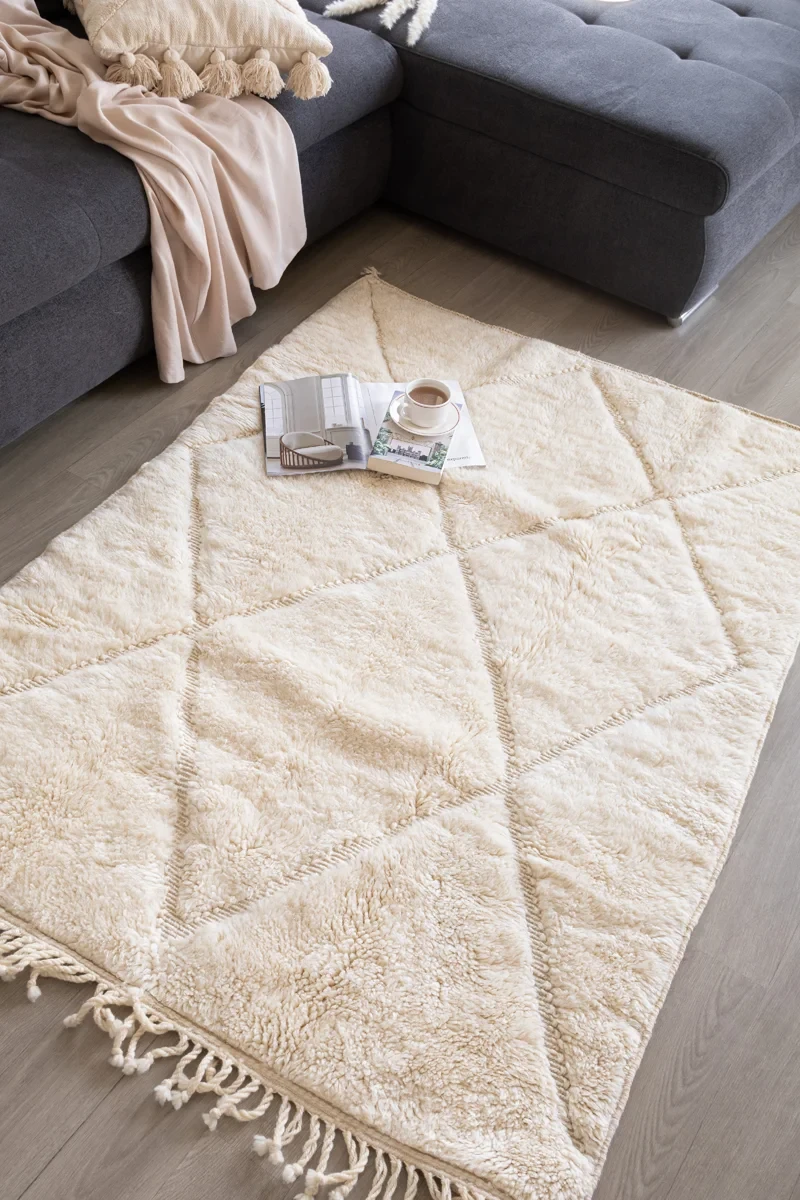
A pile rug is a completely different sensory experience. The thick wool absorbs sound, insulates against cold floors, and invites you to sit, stretch out, or simply stand barefoot on a winter morning. The Mrirt White Rug – Nuage (€350) captures this beautifully: its dense, cloud-like wool wraps around your feet in a way that only a hand-knotted natural wool rug can.
Care and Longevity: Which One Lasts Longer?
Kilims are generally easier to clean. Their flat surface traps less dust, and many can be washed flat or spot-cleaned with ease. The trade-off is that exposed weft threads can wear more quickly in high-traffic areas if the rug is not rotated regularly.
A well-made pile rug in natural wool is extraordinarily durable. Middle Atlas wool contains natural lanolin, which repels light stains and keeps the fibres supple. Regular vacuuming and a professional clean every two to three years are all it takes to keep a pile rug looking beautiful for decades. For households with children or pets, a dense pile rug like the Beni Ouarain Plain White Rug – Mont Blanc (€700) is often the smarter long-term investment.
Which Style Suits Which Interior?
Kilims complement contemporary, Scandinavian, and bohemian interiors with ease. Their flat geometric patterns create a graphic dialogue with furniture without visually weighing down the room. They are also a designer's favourite for layering — placed over a larger pile rug, a kilim defines a zone and adds depth.
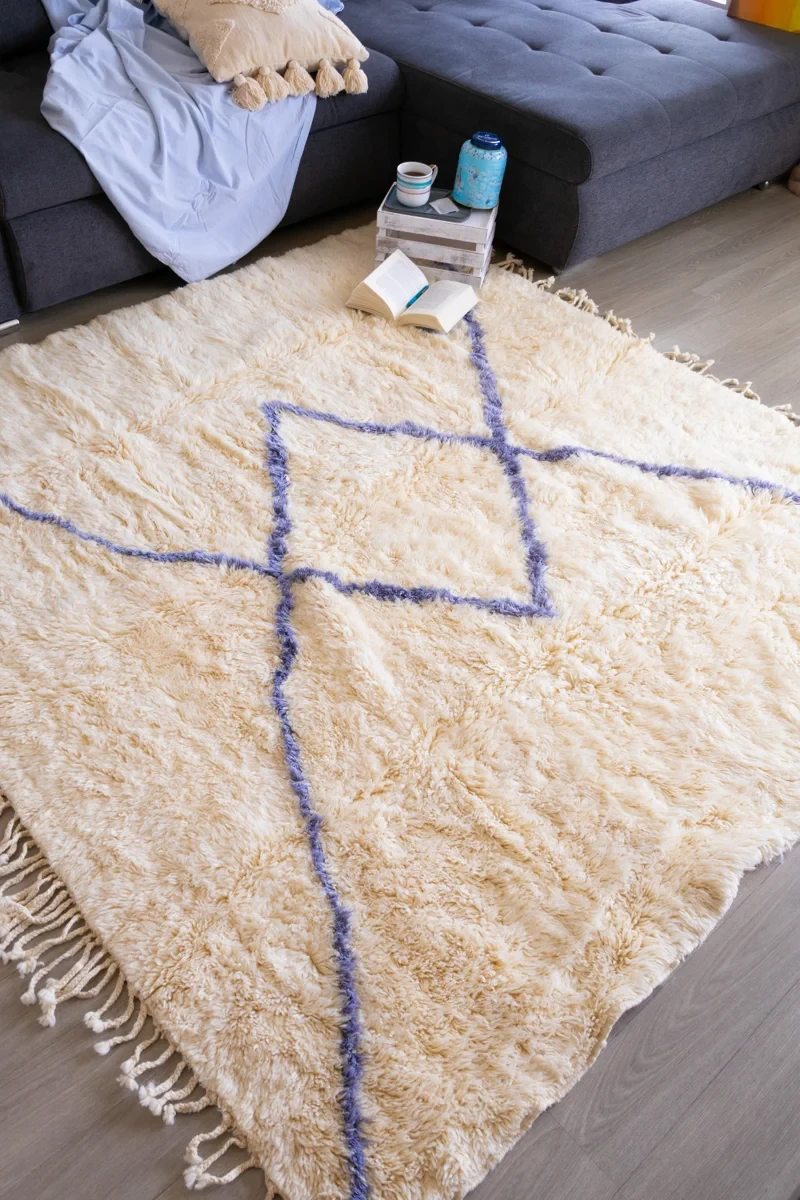
Pile rugs bring warmth, volume, and tactile richness to any space. They anchor a living room, ground a bedroom, and make an open-plan area feel intimate. The natural ivory and cream tones of Beni Ouarain and Mrirt styles work with minimalist, maximalist, and everything in between. To explore how these styles differ from one another, see our guide Mrirt, Beni Ourain or Azilal: what are the differences?
A Quick Decision Guide
- You want something lightweight, graphic, and easy to move → go with a kilim.
- You want warmth, softness, and a cocooning feel → choose a pile rug.
- The area gets heavy foot traffic → a dense pile rug will outlast a kilim.
- You love layering rugs → a flat kilim sits effortlessly on top of a pile rug.
- Budget is a priority → kilims are typically less expensive for the same surface area.
Every TAKNAJ rug — kilim or pile — is hand-woven by women artisans in the Middle Atlas from 100% natural wool. No two pieces are identical. We offer free delivery across metropolitan France (2–4 business days); EU delivery takes 5–10 business days at a flat rate per rug based on weight. Returns are accepted within 14 days, with return shipping costs covered by the customer. Payment is by card via secure Stripe checkout.
- kilim
- pile rug
- Berber rug
- flat weave
- Middle Atlas
Frequently asked questions
What is the main difference between a kilim and a pile rug?
A kilim is flat-woven with no knots or raised fibres, making it thin and lightweight. A pile rug is built from individual knots that create a thick, soft surface. The kilim lies close to the floor; the pile rug cushions and insulates.
Is a kilim easier to care for than a pile rug?
Generally yes — its flat surface traps less dust and is simpler to clean. That said, a natural wool pile rug is highly durable and easy to maintain with regular vacuuming and occasional professional cleaning.
Can you layer a kilim on top of a pile rug?
Absolutely. Layering a flat kilim over a larger pile rug is a popular interior design technique that combines textures, defines zones within a room, and adds visual depth without overwhelming the space.