Hanging a Rug on the Wall: A Guide to Berber Textiles
· 4 min read
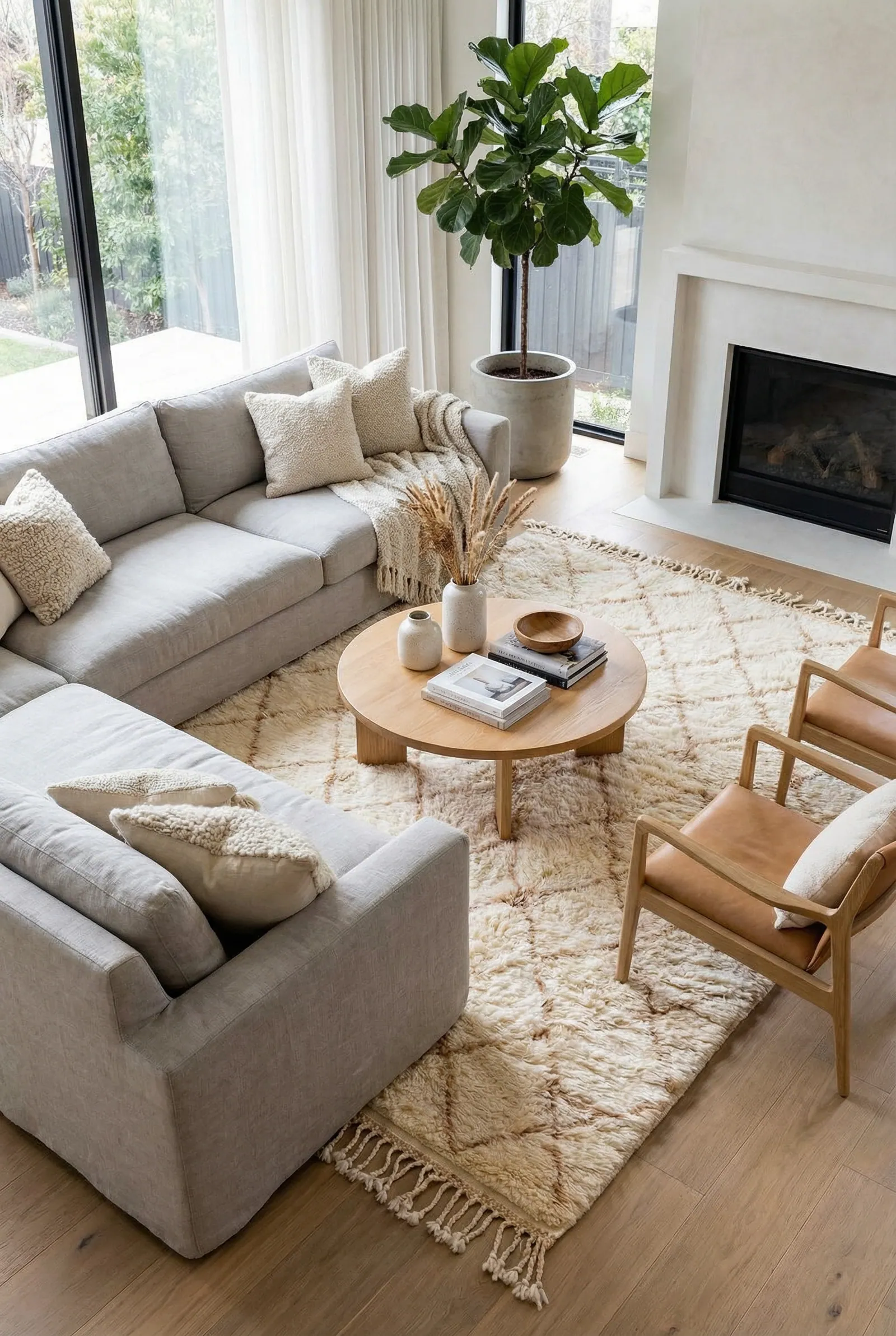
In short: The most respectful way of hanging a rug on the wall is either a wooden dowel slipped through a sleeve sewn onto the back, or an industrial hook-and-loop system mounted on a timber batten. Both methods spread the weight evenly across the full width of the rug, protect the natural wool fibres and leave no permanent marks. Avoid nails or staples pushed directly through the pile at all costs.
Why hang a Berber rug on the wall?
A Berber rug is far more than a floor covering. Every piece is hand-woven by skilled weavers in Morocco's Middle Atlas region using 100% natural wool, making each one a unique object: the geometric motifs, the deliberate irregularities and the subtle colour shifts all belong to a living textile tradition. Displaying it on the wall gives it the attention it deserves.
From a design perspective, a large-format rug above a bed replaces a painting with something far warmer and more tactile. In a hallway, even a medium-sized piece brings texture and depth to a space that plain paint cannot. Natural wool also has a mild acoustic effect, softening echo in rooms with bare walls – a welcome bonus in open-plan apartments.
Choosing the right hanging method
Wooden dowel with sewn sleeve
This is the gold-standard method for heavy or particularly valuable pieces. A tailor or alterations shop sews a narrow sleeve of neutral fabric onto the back of the rug, a few centimetres from the top edge. A wooden or metal rod is threaded through the sleeve; its ends rest on two wall-mounted hooks. The weight is distributed perfectly across the entire width, and the wool is never pierced.
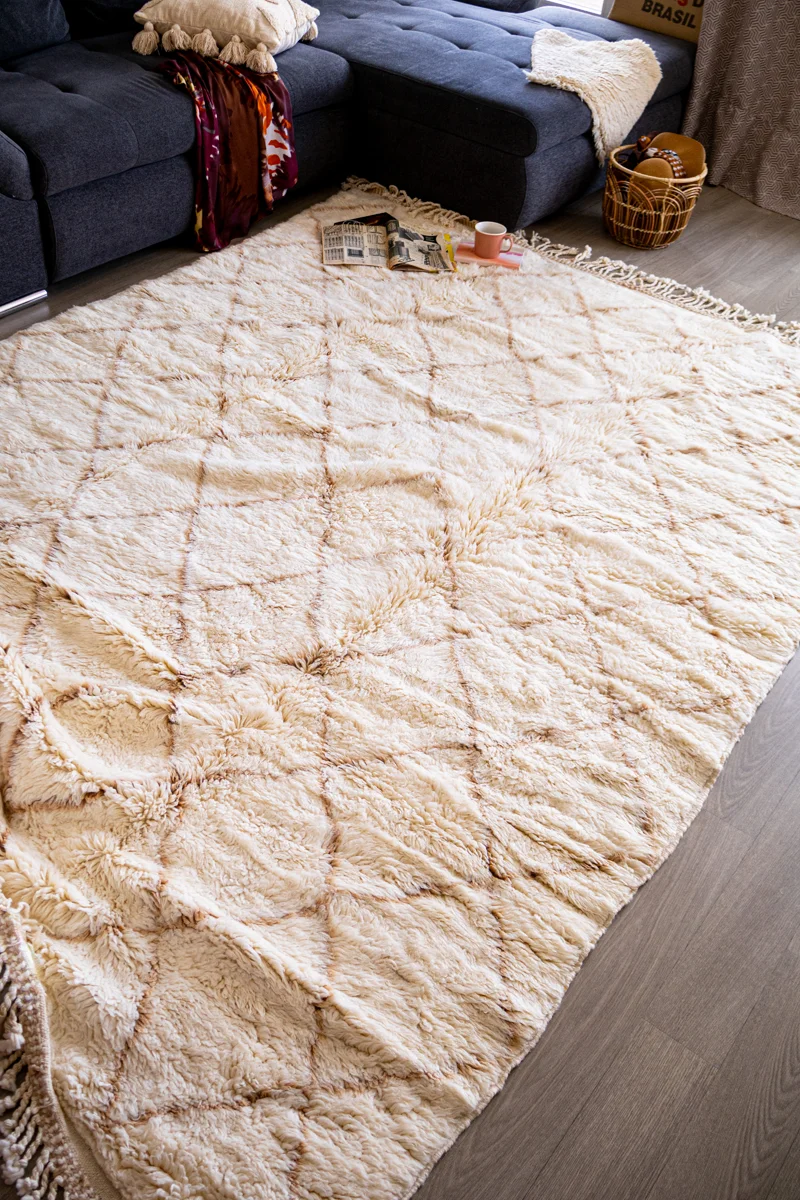
This approach is especially well suited to the Mrirt Chestnut Brown Rug – Mocca, a densely woven piece whose weight and character call for a considered mounting solution.
Hook-and-loop system on a timber batten
For lighter formats, industrial hook-and-loop tape (the kind used for textile display) glued or screwed onto a wall-mounted batten works beautifully. The corresponding strip is sewn onto the back of the rug. The main advantage: the rug comes off in seconds for cleaning or repositioning. Make sure the tape runs at least two-thirds of the rug's width to prevent sagging or bowing in the centre.
Decorative clamps and display rods
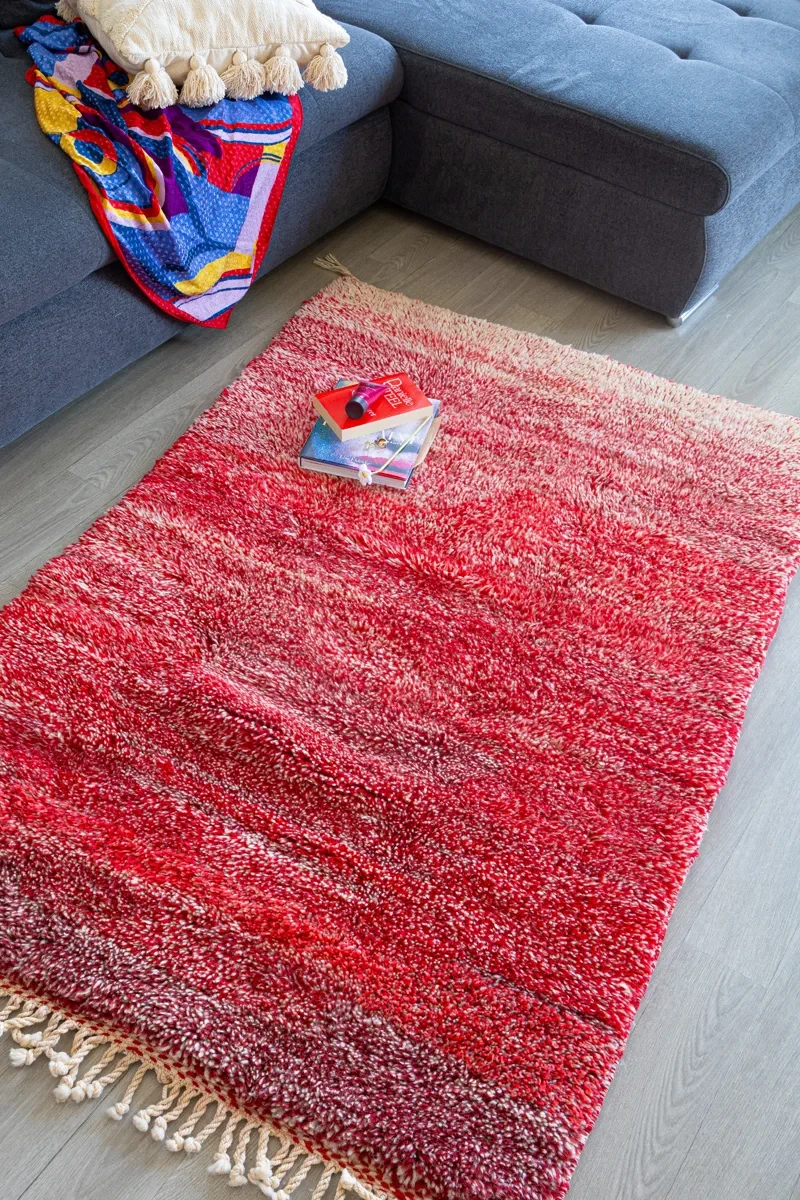
For a more graphic, gallery-style look, brass or steel clamps attached to a visible rod frame the top edge of the rug like a work of art. This solution suits bold, colourful pieces such as the Mrirt Vivid Red Rug – Volcano, whose warm reds and oranges are beautifully set off by a matte-black or antique-gold metal rod.
Preparing the wall and choosing the right spot
Before fixing anything, identify what your wall is made of: plasterboard, concrete, brick or stone each require different fixings. Plasterboard needs toggle anchors or cavity fixings; concrete and brick take standard wall plugs. For a large rug, plan for at least two anchor points, ideally three spread evenly across the width.
When deciding where to hang the rug, keep these principles in mind:
- Avoid walls that receive prolonged direct sunlight – natural wool can fade gradually over time.
- Keep the rug away from heat sources such as radiators and fireplaces, which dry out the fibres.
- In a bedroom, the bottom edge of the rug should sit roughly 20–30 cm above the headboard.
- In a living room, aim to centre the rug visually at eye level, approximately 150–160 cm from the floor.
Caring for a wall-hung Berber rug
A rug hung on the wall accumulates far less dirt than one on the floor, but it does gather surface dust. A monthly pass with a vacuum cleaner set to low suction and fitted with a soft-bristle attachment is all that is needed – always work in the direction of the pile, never against it.
Once or twice a year, take the rug down and shake it gently outdoors. If a mark appears, blot it immediately with a damp cloth and a little diluted Marseille soap; never rub. Natural wool has an inherent resistance to soiling that makes maintenance genuinely straightforward.
Ordering and receiving your TAKNAJ rug
Delivery within metropolitan France is free and takes 2–4 business days. For the rest of the European Union, allow 5–10 business days; shipping is charged at a flat rate calculated by weight per rug. Payment is by card only through our secure Stripe checkout. You have 14 days to return a rug if you change your mind (return shipping costs are the customer's responsibility). For full details on how we ship, see our guide on Shipping Berber rugs to France and Europe.
Every TAKNAJ rug is a hand-woven original from the Middle Atlas. Hung on the wall, it becomes the living heart of your home.
- wall decor
- Berber rug
- Mrirt
- natural wool
- Moroccan craft
Frequently asked questions
What is the best way to hang a Berber rug on the wall without damaging it?
The safest method is a wooden dowel threaded through a sleeve sewn onto the back of the rug: the weight spreads evenly and the wool is never pierced. For lighter rugs, a hook-and-loop system on a wall-mounted batten works just as well.
Can a heavy rug be hung on a plasterboard wall?
Yes, provided you use appropriate cavity fixings or toggle anchors and spread the load across multiple points. Screwing directly into the wall studs gives the strongest hold.
How do you clean a Berber rug that is hung on the wall?
Vacuum it once a month on a low setting with a soft-bristle attachment, always moving in the direction of the pile. Take it down once or twice a year for a gentle shake outdoors.